Site Speed Optimization — Lift Your Google PageSpeed Insights Score

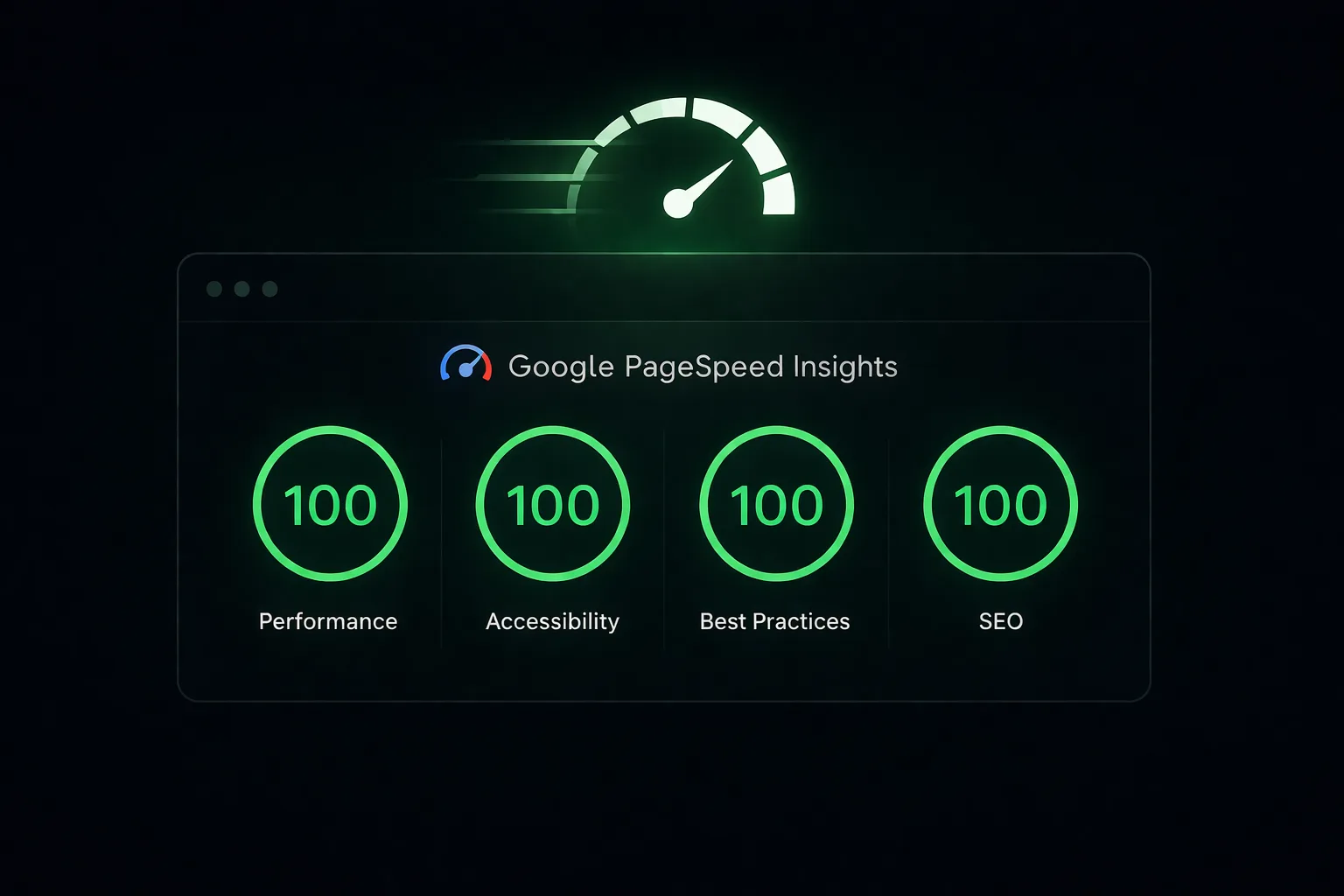
Green PageSpeed Insights and Core Web Vitals in Search Console — with a before/after report for every metric.

from $399
  • 92 views
  • today updated
Message on Telegram
  • Available to start
  • Staged payment: 30–50% upfront
  • NDA on your template or ours
  • Hands-on support

Service overview

A slow site loses Google rankings and loses revenue on conversions - every extra second of mobile load time drops conversion by an average of 7–20%. We optimize your site for Google PageSpeed Insights and move Core Web Vitals (LCP, INP, CLS) into the green zone in Search Console. Speed stops being a drag on SEO and conversions.

We work against real metrics, not vague "general improvements." Every fix has a measurable before-and-after effect: TTFB, LCP, INP, CLS, TBT, DOM size, page weight. The deliverable is a before/after report with concrete numbers for every metric and documentation of the changes made.

We work with any stack: WordPress (including WooCommerce), Shopify, OpenCart, Bitrix, Joomla, Drupal, custom CMS, hand-rolled sites, React/Next.js, Vue/Nuxt, Astro, static sites. Each stack gets its own tools and approach.

What is included

  • Audit and baseline measurement - PageSpeed Insights (mobile + desktop), field-data Core Web Vitals from Search Console, profiling in Chrome DevTools (Performance, Network, Coverage), waterfall analysis of load, testing on different devices and networks.
  • Image optimization - WebP/AVIF conversion with fallback, responsive srcset across pixel densities, lazy-load for images below the fold, correct width/height (CLS prevention), preload and fetchpriority for the LCP image, lossless compression.
  • Fonts - self-hosting (instead of Google Fonts on a third-party domain), font-display: swap, preload of critical fonts, subsetting (only needed glyphs and weights), removal of unused styles.
  • CSS - removal of unused code, critical CSS inlined for above-the-fold, minification, deferred loading of non-critical styles, bundling or splitting based on project structure.
  • JavaScript - minification and tree-shaking, code splitting, defer/async for non-critical scripts, lazy-loading of modules, removal of duplicate libraries, optimization of long tasks and INP blockers, replacement of heavy libraries with lighter alternatives.
  • Third-party scripts - audit of trackers and widgets (GA, GTM, Pixel, Hotjar, chats, ads), facades for heavy widgets (YouTube → preview, chats and maps → load on click), moving tracking to server-side where possible, minimization of ad code.
  • Server side - HTTP/2 or HTTP/3, gzip/brotli compression, caching headers (Cache-Control, ETag, immutable), TTFB optimization, CDN setup, server-config check (PHP version, OPcache, Node settings), CMS-side page cache configuration.
  • HTML and DOM - reducing DOM size, removing extra markup, optimizing structure for fast render.
  • Final measurement and handover - PageSpeed Insights re-run, Lighthouse, Core Web Vitals on lab and field data, real-device testing, regression check that nothing broke - forms, analytics, integrations, cart.

How we work

  1. Baseline metrics measurement and audit
  2. Report with a prioritized fix list
  3. Image and font optimization
  4. CSS and JavaScript work, third-party script tuning
  5. Server-side optimization and caching
  6. Final measurement and before/after report

What you get

  • An optimized site with improved PageSpeed and Core Web Vitals metrics
  • A before/after report with numbers for every key metric (LCP, INP, CLS, TBT, TTFB, page size, request count)
  • Screenshots of measurements before and after
  • Documentation of the changes made - what was touched, where, and why
  • A list of what we did not do and why - for example, a script that is business-critical but drags down metrics, plus our recommendation on what to do with it next
  • Recommendations for keeping the result as the site evolves

How we differ from plugins and auto-optimizers

1) We do not break the site. Plugins like «WP Rocket in one click» often wreck the layout, break analytics, hit forms and integrations. We test every change in a real environment and roll back anything that hurts.
2) We fix the cause, not the symptom. Auto-optimizers can only compress and cache. If the problem is a heavy JS framework, duplicate code, or bad architecture - a plugin will not close it. We figure out why your site specifically is slow and remove the source.
3) We work with field data, not just the test score. The PageSpeed score is a synthetic test under ideal conditions. Real users (CrUX, Search Console) can see completely different numbers. We optimize what actually affects users.
4) We understand the stack. We know the specifics of WordPress, Bitrix, Shopify, custom CMS, modern JS frameworks, and hand-rolled solutions. Each stack gets its own approaches and constraints.

Who it is for

Sites with red or yellow PageSpeed Insights on mobile
Projects that lost rankings after Core Web Vitals updates
E-commerce and services with expensive traffic - every second of load time = money
Sites preparing for SEO promotion - speed delivers a noticeable rankings lift
Projects that have already tried plugins and quick fixes with no result
Any site that wants to catch up to competitors on speed and pass Core Web Vitals

Timeline

Simple site (landing page, blog) - 3–5 days. Corporate site or shop - 5–10 days. Complex SPAs or large e-commerce - case by case. We give an exact ETA after the first measurement.

Pricing

From $399 depending on scope and stack. The final price is locked after we analyze the site, before we start work.

Frequently asked questions

What PageSpeed score is realistic to expect?
On most sites we hit the green zone — 90+ on mobile. Sometimes we run into hosting limits, heavy third-party JS (chats, analytics, ad networks), or CMS architecture. In those cases we tell you straight up what maximum is realistic on the current stack and what is needed for further growth.
Do you work with my CMS / my stack?
We work with WordPress (including WooCommerce), Shopify, OpenCart, Bitrix, Joomla, Drupal, custom CMS, hand-rolled sites, React/Next.js, Vue/Nuxt, Astro, static sites. If your stack is not on the list — just ask, we will sort it out.
Will you break my site?
Before we start, we take a backup and work on a staging environment or a copy of the site if one exists. Every change is tested. Only verified changes go to production. If something does break — we roll back in minutes.
What about third-party scripts — Google Analytics, Tag Manager, chats, ads?
They are usually the ones pulling metrics down. We do not disable functionality the business needs, but we optimize loading: defer, lazy-load, facades for heavy widgets (YouTube, chats, maps), tracking minimization, moving to server-side where possible. We agree upfront on what is fair game and what is not.
Does speed affect SEO?
Yes. Core Web Vitals has been an official ranking factor since 2021. A slow site ranks worse, especially on mobile. Plus the indirect hit: slow pages index worse (Googlebot burns more crawl budget), have a higher bounce rate, and lower scroll depth — all of which hurts rankings.
What if I have bad hosting?
If hosting is the real ceiling (low TTFB, PHP/memory limits, instability), we will tell you upfront and recommend migration options. We can also handle the move to a proper host as a separate engagement.
Can I order just the audit without the optimization?
Yes. We run the measurements, profile the site, and hand over a report with a prioritized fix list — your developer or contractor implements it. The audit-only price is discussed separately.
What if I update plugins or add new scripts after the optimization?
After significant site changes, metrics can drop — that is normal. The documentation of the changes we made stays with you, so your developer can factor it in when adding anything new. We can also re-run the optimization on request.